

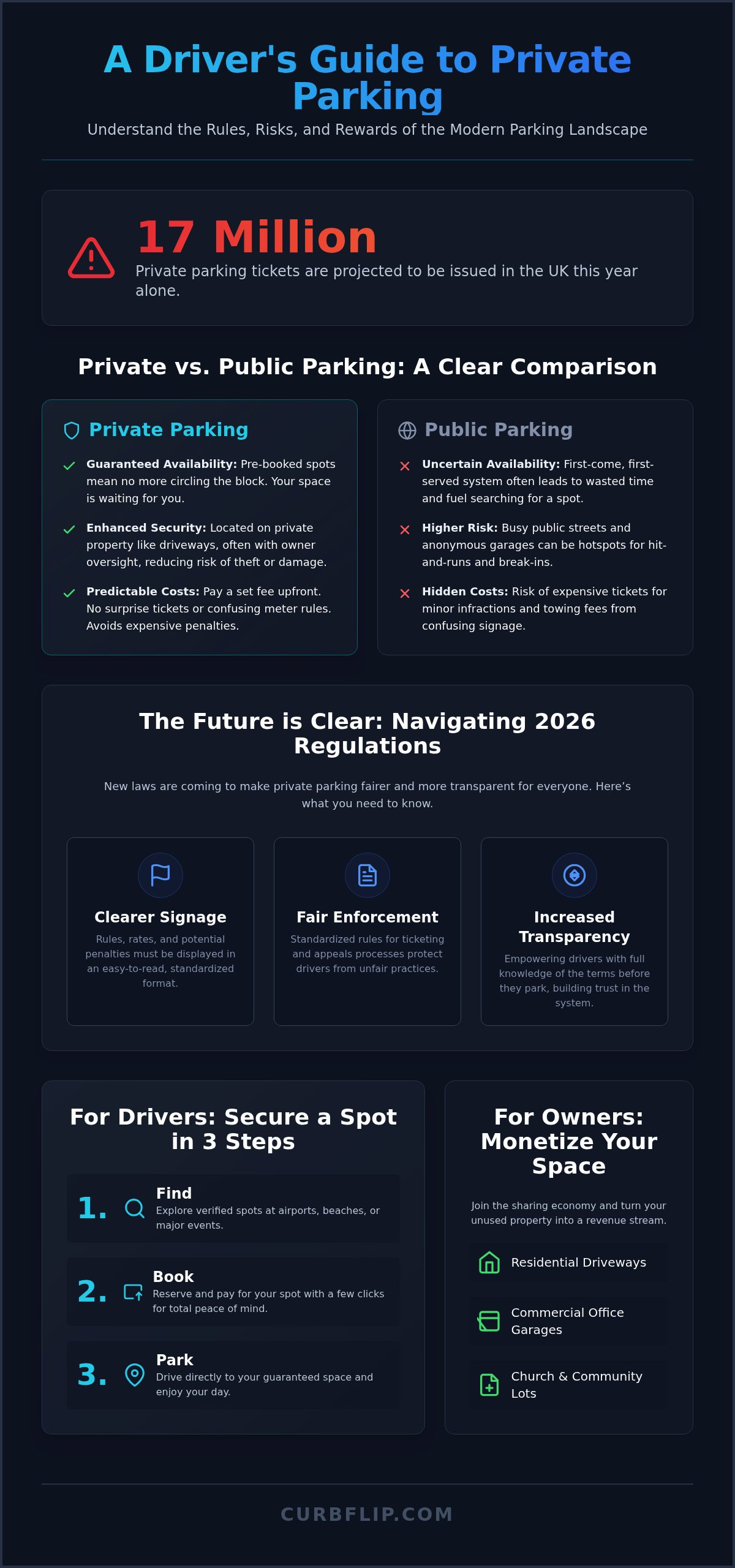
Did you know that over 17 million private parking tickets are expected to be issued this year? That's a staggering reminder of how confusing and stressful finding a spot has become. Most drivers have felt that familiar frustration of circling a block for twenty minutes or squinting at a complex sign, wondering if their car is truly safe. Understanding how private parking works is the first step toward a stress-free journey and a more secure vehicle.
We're here to clear up the confusion and put you back in control. This guide covers everything you need to know, from understanding your legal rights under the latest 2026 regulations to the security benefits of a reserved space. You'll learn how to secure a reliable spot with total confidence. We also show you how to join the sharing economy by turning your unused driveway into a simple revenue stream. It's as easy as following a few simple steps. We'll break down the rules, explore modern booking solutions, and explain exactly how to make your property work for you.
Key Takeaways
- Identify the core differences between government-owned lots and private spaces to find more secure, cost-effective options for your next trip.
- Navigate the 2026 legal landscape of private parking rules and signage requirements to stay informed and protect your rights.
- Explore how property owners can easily monetize unused asphalt to fund community projects or personal savings through scannable signs.
- Master the five-minute process for finding and reserving verified spots at airports, beaches, or major events.
- Learn why the sharing economy is replacing outdated permit systems with flexible, digital reservation tools for total peace of mind.
What Is Private Parking? Defining the Modern Landscape
A private spot is any space owned by an individual, a business, or a non-government entity. Unlike street parking managed by the city, these spots belong to someone who has the legal right to decide who uses them. When Defining Private Parking, it's helpful to look past the old "Keep Out" signs. Today, these spaces are part of a massive sharing economy. This shift transforms idle property into a valuable resource for drivers and owners alike.
Common examples of these assets include:
- Residential driveways near transit hubs, beaches, or stadiums.
- Church parking lots that sit empty during the work week.
- Commercial office garages that offer weekend or evening access.
The modern landscape has moved away from "restricted access" toward "on-demand" utility. It's no longer just about keeping people out. It's about letting the right people in. Urban commuters now prefer private spots because they offer a level of reliability that city streets can't match. You skip the hunt for a meter and pull directly into a space that's waiting for you.
Residential vs. Commercial Private Parking
Homeowners have a fundamental right to manage their own land. This includes the ability to rent out driveway space to a traveler heading to the airport or a fan going to a big game. It's a simple way to help the community while earning extra cash. Commercial private parking is slightly different. These are the office garages, church lots, and retail spaces you see in every city. These entities use their private status to offer premium perks like better security or proximity to major attractions. In high-demand zones like beaches, these private options are often the only way to avoid the stress of a full public lot.
The Legal Definition of Private Property in Parking
Property ownership is the foundation of this system. This legal standing allows an owner to set specific terms for how their land is used. There's a big difference between a space being "not public" and being "restricted." A spot can be private property but still accessible to anyone who follows the rules or pays a fee. By 2026, new regulations are focusing on making these rules clearer for everyone. Modern laws are shaping how we share private assets, ensuring that signage is easy to read and that enforcement is fair. This transparency helps both the driver and the owner feel confident in every transaction.
Private vs. Public Parking: A Comparison for Drivers
Choosing where to leave your car shouldn't feel like a gamble. Public parking is everywhere, but it often comes with a side of anxiety. You might find a spot quickly, but there's no guarantee it will be still be available when you arrive. Private parking offers a refreshing alternative by providing guaranteed spots and a more controlled environment. While municipal garages are often cold and anonymous, private spaces like driveways or church lots feel more like a neighborly agreement. You're parking on someone's property, and that personal connection often leads to a better experience.
Public parking has hidden costs that many drivers overlook. It isn't just the hourly rate. It's the risk of a $50 or $80 ticket if you're five minutes late. It's the stress of your car being towed if you misinterpret a confusing city sign. Most importantly, it's the 20 minutes of your life spent circling the block. By choosing a private spot, you often pay less through pre-booking and avoid these expensive surprises entirely. To keep things fair for everyone, many regions follow specific Private Parking Rules and Signage protocols. These laws ensure that rates and rules are transparent before you even turn off your engine.
Security and Vehicle Safety
Your car is usually much safer in a private lot than on a busy public street. Street parking is a magnet for hit-and-runs because drivers are constantly squeezing into tight spaces or rushing to beat a meter. Private owners have a personal stake in their property. They provide a level of oversight that a city employee managing 500 meters simply can't match. There's a huge psychological benefit to knowing exactly where your car is. You don't have to wander through a massive municipal deck trying to remember if you parked on level 4 or level 6. This peace of mind is why more people are choosing private parking for their daily needs.
Availability and Reservations
Nothing ruins a trip to the beach or a big game like the "circling the block" ritual. You waste gas, lose time, and arrive frustrated. Switching to a daily parking reservation changes the entire experience. You drive straight to your destination, park, and start your day. This is especially helpful during peak seasons when public lots fill up by early morning. For those living in high-density cities, monthly private spots are becoming a standard way to secure long-term peace of mind. If you're tired of the public lot lottery, you can find a reserved spot in minutes and take the stress out of your next trip.
The Benefits of Private Parking for Property Owners
If you own a driveway, a small lot, or even a few spots behind an office, you're sitting on a valuable asset. That empty space isn't just asphalt; it's a solution for a driver in need and a steady paycheck for you. Private parking management has evolved from a manual chore into a streamlined, digital process. By sharing your space, you're not just earning extra cash. You're helping reduce urban congestion and providing a safer alternative to anonymous municipal lots. It's a neighborly way to make the city work better for everyone while boosting your own bank account.
Organizations like churches and schools often find that their lots are their most underutilized resources. These spaces often sit empty for five or six days a week. By opening them up to the public through a managed system, these groups can fund vital community projects, repair aging buildings, or support local programs. It's a pragmatic way to turn a static piece of land into a helping hand for the neighborhood. The effort required is minimal because modern tools handle the scheduling and payments automatically.
Monetizing Your Empty Driveway
Homeowners living near airports, beaches, or stadiums have a massive advantage. These high-demand zones are notorious for parking shortages and sky-high prices. You can offer a better deal and still make a significant profit. The process is as easy as 1-2-3. First, you list your space on a digital marketplace. Second, you display a scannable sign. Third, you watch the reservations roll in. For many property owners, CurbFlip Scannable Parking Signs are the preferred choice. They bridge the gap between your physical property and the digital world, making every transaction seamless and professional.
If you find that an old, non-functional vehicle is currently occupying a space you'd rather rent out, Cash For Junk Cars Michigan offers a convenient way to sell your junk car and reclaim that valuable real estate for your new business venture.
Controlling Access and Liability
Beyond the income, managing your property correctly protects your peace of mind. Clear signage is your first line of defense against trespassing and confusion. It establishes the rules upfront so everyone knows who is authorized to be there. This is where your private property parking rights become a powerful tool. You have the legal standing to set your own rates and rules. Modern scannable signs offer a level of security that old-fashioned paper permits simply can't touch. They provide a digital paper trail, proving exactly who reserved the spot and for how long. This reduces your liability and ensures you have total control over your land. Using a dedicated platform to handle the records means you don't have to spend your weekends acting as an enforcement officer. The system does the heavy lifting for you.
Navigating Private Parking Rules and Signage
Clear communication is the secret to a smooth parking experience. For a property owner, a sign isn't just a piece of metal; it's a legal contract. To make private parking rules enforceable, signs must be placed in visible locations and contain specific information about rates and restrictions. In the UK, a unified Code of Practice taking effect in 2026 standardizes these requirements, mandating a 10-minute grace period for drivers. This transparency helps prevent the common "gotcha" moments that lead to frustration and appeals. When rules are easy to read, drivers are much more likely to respect your land.
Understanding the distinction between public and private enforcement is vital. A city-issued ticket is a fine backed by local law, but a private parking charge notice is technically an invoice for a breach of contract. You have the right to set the terms for your property, but those terms must be clearly displayed. By 2026, traditional "Permit Only" signs are becoming obsolete because they don't provide a way for authorized visitors to verify their status in real-time. Modern signage eliminates this guesswork by connecting the physical spot to a digital record.
The Evolution of Parking Signs
Parking management used to be a game of "No Parking" and "Violators Will Be Towed." That aggressive approach often backfires by creating tension with neighbors and visitors. The digital transformation has replaced these threats with "Scan to Park" logic. A scannable sign acts as a 24/7 virtual attendant. It tells the driver exactly how to pay, how long they can stay, and what the rules are without you ever having to step outside. This real-time digital authorization provides a layer of security that paper permits can't match. You know exactly who is in your driveway at any given moment, and the system handles the verification for you.
Enforcement Without the Stress
Handling an unauthorized parker doesn't have to result in a neighborly dispute or an expensive tow truck visit. Most parking issues happen because of simple confusion over where the public street ends and your private parking begins. Digital records provide undeniable proof of who reserved a spot and when their time expired. If someone parks without authorization, you have a clear, timestamped record to support your case. This transparency leads to better behavior from everyone. When drivers see a professional, scannable sign, they recognize that the space is actively managed. You can order a scannable parking sign today to start managing your space with total confidence and zero stress.
How to Secure Private Parking in 5 Minutes
Securing a private parking spot used to be a matter of luck or local knowledge. You had to hope for a hand-painted sign or a friendly neighbor with an empty driveway. Now, it's a streamlined process that takes less time than ordering a coffee. You can move from the frustration of circling blocks to the comfort of a guaranteed reservation by following a few simple steps. This digital approach removes the uncertainty of urban driving and puts the power back in your hands.
Follow this linear path to find your perfect spot:
- Step 1: Identify your needs. Decide if you need short-term airport parking, a spot for a weekend event, or a long-term monthly reservation for your daily commute.
- Step 2: Use a digital marketplace. Browse verified listings to see photos, read reviews, and check the exact proximity to your destination. This ensures you know exactly what you're getting before you arrive.
- Step 3: Book and receive confirmation. Complete your reservation in seconds. You'll receive an instant digital confirmation with all the details you need, including arrival instructions.
- Step 4: Follow the scannable sign. When you arrive at the property, look for the professional signage. Scan the code to check in and verify your authorization. It’s that simple.
Finding the Best Deals Online
Planning ahead is the smartest way to save your hard-earned money. When you look for cheap airport parking, booking in advance through a private marketplace can save you up to 60% compared to standard drive-up rates. Use specialized filters to narrow down your search. You can quickly toggle between options like "Beach Parking" for a family day out or "Monthly Truck Parking" for your business needs. This transparency allows you to compare prices and security features in real-time. You get the peace of mind that comes with a guaranteed spot, meaning you can focus on your flight or your meeting instead of the ticking parking meter.
Joining the CurbFlip Community
The sharing economy works best when it's built for simplicity and trust. Whether you're a driver looking for a secure space or a homeowner ready to host, the process is designed to be neighborly and efficient. The scannable sign system acts as the bridge that connects both sides of the marketplace. It ensures that every transaction is secure, the rules are clear, and the experience is entirely stress-free for everyone involved. Finding reliable private parking shouldn't be a chore that ruins your day. It should be a seamless part of your journey. Take the first step and list your space or find a spot today to see how easy it is to join the future of urban mobility.
Take Control of Your Parking Experience Today
The days of circling the block and deciphering confusing city signs are over. You now understand how private parking provides a smarter, more secure alternative to traditional public lots. Whether you're a driver looking for guaranteed parking spots or a property owner ready to monetize your driveway, the solution is right at your fingertips. By leveraging secure QR-based booking, the entire process is simplified for everyone involved. Our platform has been active since 2013, helping neighbors connect and cities breathe a little easier.
Join a community that values speed, security, and peace of mind. It doesn't matter if you need a spot for a beach trip or want to fund a community project with your empty lot. The tools are ready for you. You can start earning passive income with CurbFlip Scannable Parking Signs today. Take the first step toward a stress-free journey and see how simple managing your space can actually be. Your perfect spot is waiting for you.
Frequently Asked Questions
Is it legal to park in a private parking lot without permission?
No, parking on private property without authorization is generally considered a breach of contract or trespassing. When you enter a private lot, you're agreeing to the terms set by the owner, which usually include a fee or a valid reservation. If you don't have permission, the owner has the legal right to issue a charge notice or have the vehicle removed. Always check for professional signage before you turn off your engine to avoid unnecessary costs.
How can I tell if a parking space is private or public?
You can identify private spaces by looking for specific signage, painted markings on the ground, or physical barriers like gates. Public parking is typically managed by the local council and features standard city meters or "pay and display" machines. Private lots often display "Permit Only" or "Scan to Park" signs that list a specific company or individual as the owner. If you see a QR code on a sign, it's a clear indicator of a managed private spot.
Can I rent out my own private driveway to other drivers?
Yes, you can rent out your driveway to earn extra income, provided you follow local regulations. Most residential areas allow homeowners to share their space as part of the growing sharing economy. It's a great way to help travelers find a spot while putting your unused asphalt to work. Just be sure to check your local zoning laws or HOA rules to ensure there aren't specific restrictions on commercial activity in your neighborhood.
What are the benefits of private parking over street parking?
The main benefits include a guaranteed spot and enhanced vehicle security. Street parking is often a lottery that leaves you circling the block and wasting fuel. With private parking, you can book your space in advance and drive straight to your destination. These spots are also less prone to hit-and-runs because they aren't located in high-traffic public lanes. You get total peace of mind knowing exactly where your car is parked.
Do I need a special permit to offer private parking on my property?
You typically don't need a special permit to rent out a single driveway spot, but requirements vary if you're managing a larger lot. Some cities require a basic business license or a specific land-use permit if you're operating a commercial parking facility. It's always a smart move to check with your local planning department first. Using a digital platform helps you stay organized and provides a professional framework for your transactions without complex paperwork.
What happens if someone parks in my private spot without a reservation?
If someone parks without a reservation, you have the right to enforce your property rules. Most owners start by leaving a polite notice or using their management platform to record the unauthorized stay. If the spot is clearly marked with a scannable sign, the digital record serves as proof of the violation. While towing is an option, many owners find that clear, professional signage prevents most unauthorized parking before it even starts.
Are private parking spots safer than public garages?
Private spots are generally safer because they experience much less random foot traffic than massive public garages. A driveway or a small church lot is often under the direct oversight of the owner or a security camera. Public decks are anonymous and often lack the personal care that a private host provides. Choosing private parking reduces the risk of theft and accidental damage because your car isn't squeezed between hundreds of other vehicles.
How do scannable parking signs work for private lots?
Scannable signs work by using a unique QR code that drivers scan with their smartphones. This code takes them to a secure booking page where they can pay for their stay or verify an existing reservation. It acts as a virtual attendant, handling the transaction and record-keeping automatically. You don't have to be present to manage the space, and the driver gets instant confirmation. It's a seamless way to modernize any parking area.
Disclaimer
The content provided in this article is for informational purposes only. All uses of the CurbFlip name, images, logos, and likeness are the exclusive property of CurbFlip.com. This article may contain information researched by a third-party, meaning CurbFlip does not guarantee the accuracy, completeness, or reliability of any third-party information presented herein and assumes no liability for any decisions made or actions taken based on this content.


