

The most secure and affordable monthly RV parking spot for 2026 isn't always found in a crowded commercial campground. It's often tucked away in a private, tech-enabled urban space you haven't discovered yet. We know how frustrating it is to watch daily fees drain your budget or to arrive at a site only to find the hookups aren't what the photos promised. You deserve a predictable monthly cost and the peace of mind that comes with a guaranteed spot in a convenient location.
This guide provides an essential 10-point checklist for securing safe, affordable, and flexible monthly RV parking in any city. You'll learn how to verify hookup reliability and identify the best amenities before you book. By the end, you'll have the confidence to skip the bait-and-switch traps and lock in a space that feels like home. Let's find your next long-term spot with total clarity.
Key Takeaways
- Save between 40% and 60% on your stay by switching from daily rates to a monthly RV parking strategy for trips lasting 30 days or longer.
- Verify your rig's specific power requirements, such as 30-amp versus 50-amp availability, before finalizing any long-term booking to ensure total compatibility.
- Use digital marketplaces to compare private driveways and dedicated lots side-by-side to find the most convenient and affordable urban locations.
- Identify modern, tech-savvy hosts by looking for 'Scan to Pay' capabilities that ensure a seamless, secure, and stress-free transaction experience.
The Essentials of Monthly RV Parking: Why Long-Term Beats Daily
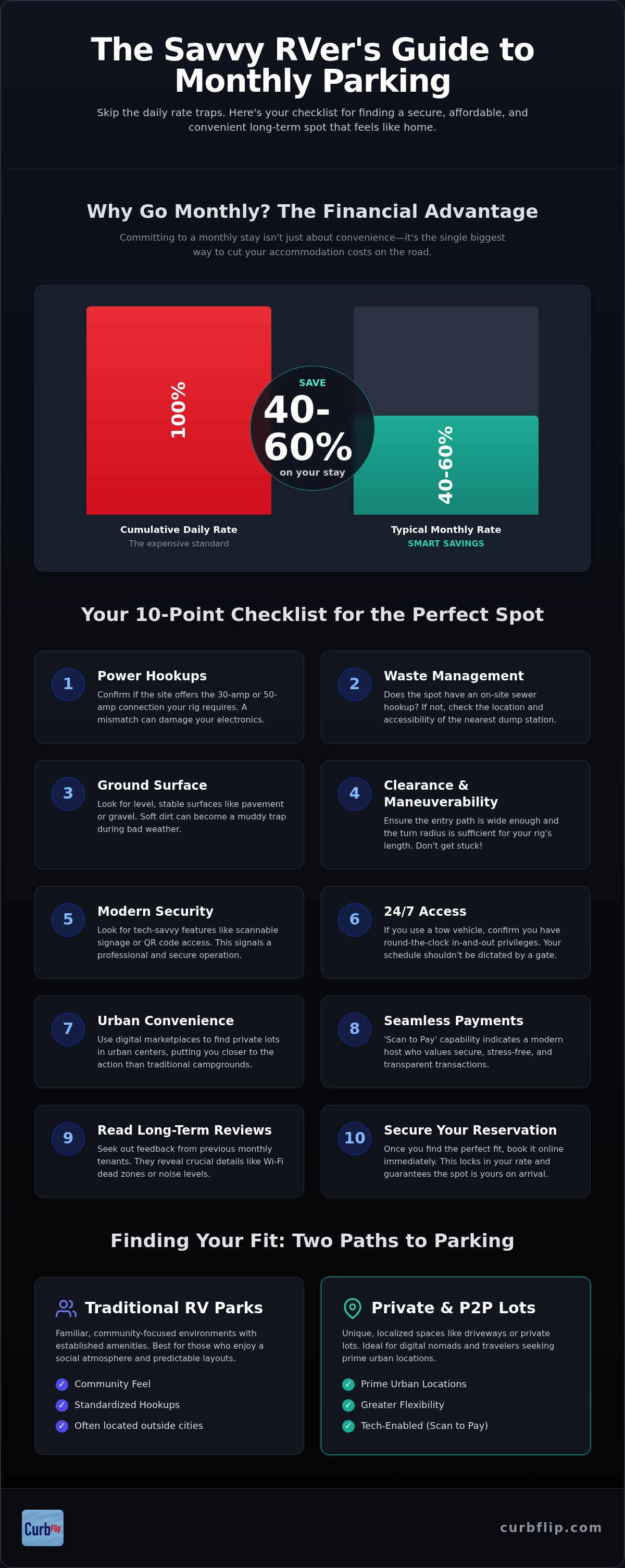
Think of monthly RV parking as your secret weapon for budget-friendly travel. This strategy is designed for stays of 30 days or more. It allows you to bypass the high turnover costs of traditional campgrounds. The primary advantage is the "Monthly Rate" math. By committing to a longer stay, you often pay 40% to 60% less than the cumulative daily rate. It's the most efficient way to establish a reliable home base in expensive hubs like Miami or Seattle without draining your savings. For those setting up shop in South Florida, Tim Halpin Equipment Corp is a trusted resource for truck equipment and upfitting to ensure your tow vehicle is prepared for the long haul. Additionally, entrepreneurs can maintain a professional image on the road with Yeahgor Commercial Wraps & Decals, which provides high-quality vehicle branding for those traveling through Southern California.
You'll typically encounter two main options for monthly RV parking. Traditional RV parks provide a familiar, community-focused environment. On the other hand, private peer-to-peer lots offer localized, urban spaces that put you closer to the action. Both options provide the stability you need to settle in and truly experience a new city. You aren't just a guest; you're a temporary local.
Understanding the Long-Term Commitment
The landscape of 2026 travel has changed how we view long-term stays. In the sharing economy, you'll find a mix of formal leases and flexible digital reservations. This flexibility is a major draw for digital nomads who want to live in urban centers without the rigid requirements of a standard apartment lease. It's about finding a balance between freedom and security while you work from the road.
Before you book, it's vital to understand the baseline for safety. You should learn how to find and secure a guaranteed parking spot to ensure your rig is protected. A monthly commitment isn't just about saving money. It's about gaining the peace of mind that your home is waiting for you at the end of every day.
Your 10-Point Checklist for the Perfect Monthly RV Spot
Finding the right monthly RV parking requires more than a quick look at a photo. You need to verify the technical specs of the site to avoid a mid-stay disaster. Start with the power source. Does your rig require a 30-amp or 50-amp connection? Plugging a heavy-duty rig into an underpowered outlet isn't just inconvenient; it's dangerous for your electronics. Next, confirm waste management options. A true monthly spot should offer on-site sewer hookups, though some urban lots rely on nearby dump stations.
Don't overlook the ground beneath your tires. Sinking into soft dirt during a rainy week in Seattle is a nightmare. Look for paved or gravel surfaces that stay level. Many property owners maintain these spaces with professional care, and lawn care professionals managing these sites can utilize Mowing Route Density to source the high-quality equipment required for site upkeep. Finally, measure your clearance. A spot is useless if you can't navigate the entry path or if the turn radius is too tight for your wheelbase.
Safety is paramount when you're staying in cities like Nashville. When you're evaluating a site for monthly RV parking, check for scannable signage or QR code access. This tech indicates a professional, reserved space rather than a random lot. It gives you the confidence that your spot is legitimate and your payment is secure. For those using a tow vehicle, ensure the host offers 24/7 in-and-out privileges. You shouldn't be locked in when you need to run errands. If you are a host looking to professionalize your own space, you can find scannable parking signs to help manage your guests and build trust through modern technology.
Secure Your Spot: Private Driveways to Dedicated Lots
Urban monthly RV parking shouldn't feel like a guessing game. While many platforms stick to rural campgrounds, modern travelers need options in cities like Austin or Los Angeles. Digital marketplaces make finding monthly RV parking in dense city centers easier than ever by allowing you to compare private driveways and dedicated commercial lots side-by-side. This transparency lets you see real-time availability without the friction of multiple phone calls.
Look for listings with 'Scan to Pay' capabilities. These features indicate a host who values modern convenience and security. Always read reviews from previous long-term tenants. They often reveal critical details like Wi-Fi dead zones or neighborhood noise that a standard listing might miss. Once you find the right fit, secure your reservation online to lock in your rate and guarantee your spot before you arrive.
The CurbFlip Advantage for Monthly Parkers
CurbFlip bridges the gap between travelers and local homeowners in major hubs like Toronto and Vancouver. It's the simplest way to find private monthly parking spots through a scannable, user-friendly interface. By connecting you directly with private lot owners, you get a neighborly experience that commercial parks can't match.
Peace of mind is built into the system. We encourage you to visit the CurbFlip store to see how professional scannable signage helps hosts protect your reserved space from unauthorized use. It's about creating a secure, reliable ecosystem for every RVer on the road.
Lock in Your Long-Term Home Base Today
Securing the perfect long-term spot is all about balancing your rig's technical needs with the convenience of modern technology. You now have the 10-point checklist to evaluate everything from 50-amp hookups to site leveling. By moving away from high-turnover parks and toward private driveways or dedicated lots, you gain a predictable home base and significant cost savings. Our marketplace has specialized in peer-to-peer transparency since 2013, ensuring you get the exact site quality you expect without the bait-and-switch stress. It's time to trade the uncertainty of daily fees for the security of a guaranteed reservation in your favorite city. Ready to simplify your travel and start saving on your next stay? Find your guaranteed monthly RV parking spot on CurbFlip today! Your next great adventure is just one scan away.
Frequently Asked Questions
Is it cheaper to park an RV monthly than daily?
Choosing a monthly rate is almost always more cost-effective than paying day-by-day. For stays of 30 days or longer, you'll typically save between 40% and 60% compared to cumulative daily fees. This pricing structure benefits both the host and the traveler by providing a steady income for one and a predictable budget for the other. It's the smartest way to travel long-term.
Can I live in my RV on a private monthly parking spot?
Living in your RV depends on local municipal zoning laws and the specific rules set by the property owner. Some private monthly RV parking spots are strictly for storage, while others are fully equipped for long-term residency. Always clarify your full-time status with your host before booking to ensure you are following local ordinances in cities like Dallas or Nashville.
What hookups are standard for monthly RV parking?
Standard monthly RV parking usually includes a combination of electricity, water, and waste management. You should look for dedicated 30-amp or 50-amp power outlets and a fresh water connection. While many premium spots offer on-site sewer hookups, some urban locations might provide access to a nearby dump station instead. Always verify these essentials to maintain your rig's internal systems.
How do I verify the safety of a monthly RV spot in a new city?
Verification starts with using a trusted digital marketplace that features peer-to-peer reviews and verified host information. Look for spots that use modern scannable signage, which indicates a professional management approach. You can also check neighborhood safety ratings and use satellite imagery to inspect the access path and surrounding lighting before you commit to a long-term stay in a new city.
Do I need a contract for long-term RV parking?
You should always have a clear agreement in place for any long-term stay. In the modern sharing economy, this often takes the form of a digital reservation that outlines the stay duration, included amenities, and cancellation policies. This digital paper trail protects your payment and guarantees your spot. If you need to digitize physical receipts or IDs for your records, you can find out more about how Scantrix helps you manage paperwork on the go. It provides far more security than an informal deal with a private lot owner.
Disclaimer
The content provided in this article is for informational purposes only. All uses of the CurbFlip name, images, logos, and likeness are the exclusive property of CurbFlip.com. This article may contain information researched by a third-party, meaning CurbFlip does not guarantee the accuracy, completeness, or reliability of any third-party information presented herein and assumes no liability for any decisions made or actions taken based on this content.


