

What if your empty driveway could pay for your monthly car insurance while you're at work? Most people see a vacant space as just a patch of pavement, while drivers see a city full of restricted zones as a source of constant frustration. A digital parking marketplace bridges this gap. It turns private property into a shared resource that benefits both sides of the neighborhood. Whether you're tired of circling the block for beach parking or you have a lot that sits empty during the week, the solution is now at your fingertips.
We know that hunting for a spot is a waste of your time and energy. You deserve a way to find guaranteed parking without the anxiety of complex rules or security concerns. This guide explains how these platforms work and provides the exact steps to find, book, or monetize spaces with total confidence. We'll look at the tech behind scannable signs and show you how to manage daily or monthly reservations. It's time to make parking the easiest part of your day.
Key Takeaways
- Learn how a digital parking marketplace replaces "Lot Full" signs with real-time inventory to make your next trip stress-free.
- Master the simple steps to find specific spots like airport or beach parking using precise GPS filters and security preferences.
- Compare open and closed systems to ensure you're using the most efficient tools for your specific parking needs.
- Discover how to turn your unused driveway into a digital storefront that generates passive income with minimal effort.
- See why scannable signs are the future of management; they allow drivers to pay instantly without the hassle of downloading new apps.
Understanding the Digital Parking Marketplace: Why the Old Way is Fading
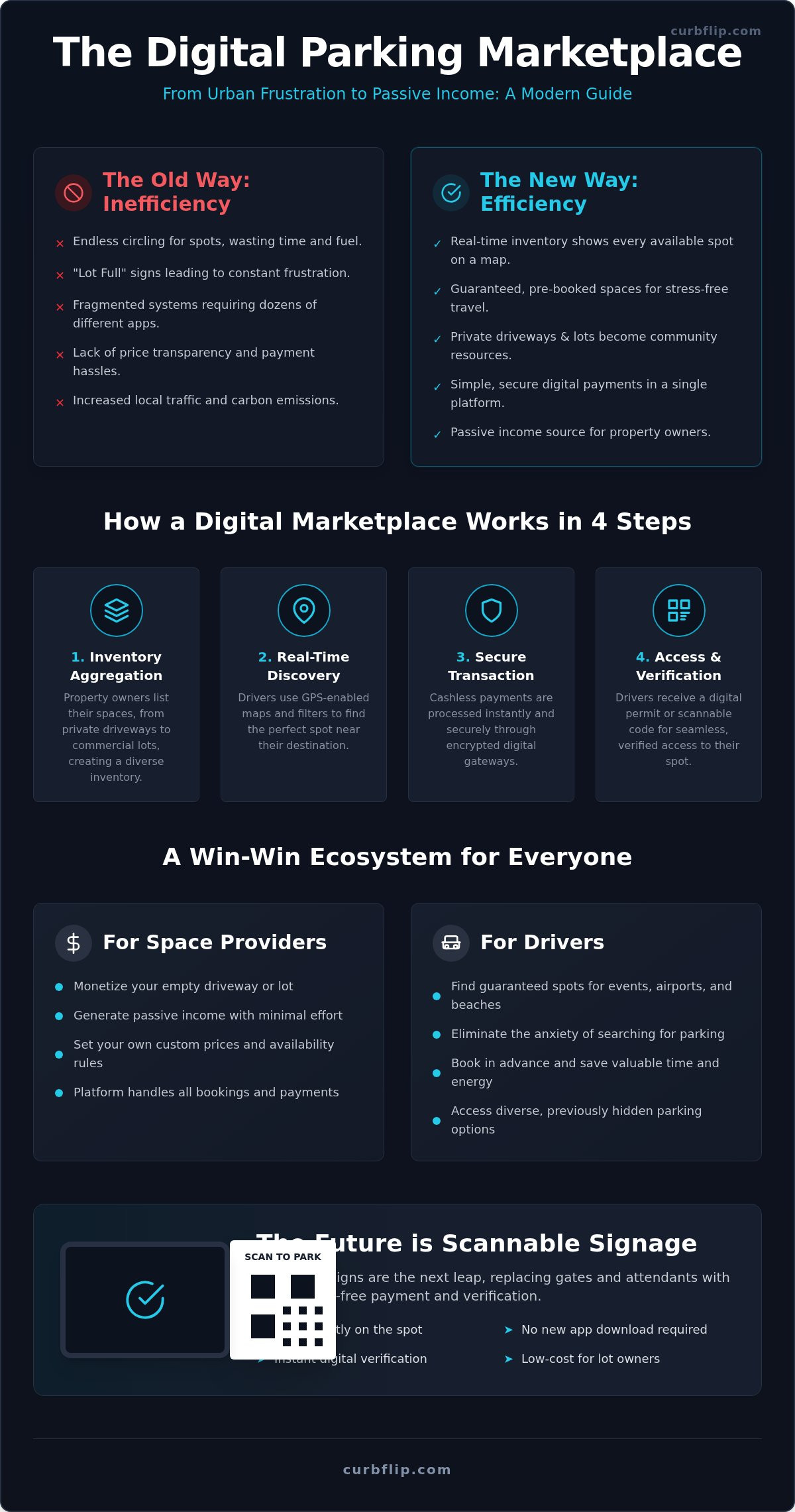
A digital parking marketplace is a specialized platform that connects people who own space with drivers who need it in real-time. Think of it as the sharing economy applied to pavement. By 2026, we've moved past the era of squinting at faded "Lot Full" signs or fumbling with broken physical meters. Instead, every available spot is visible on a digital map. This shift democratizes space, allowing a church parking lot or a private driveway to become a reliable asset for the community. It's about turning static asphalt into a dynamic, bookable resource.
The Problem with Traditional Parking Systems
Hunting for a spot isn't just annoying; it's fundamentally inefficient. Drivers spend significant time circling city blocks, which increases local traffic and carbon emissions. Traditional parking is also deeply fragmented. You shouldn't need a dozen different apps just to park in a three-block radius. Most legacy systems lack transparency. You often don't know the price or if a spot is actually available until you're idling at the gate. This uncertainty creates unnecessary stress for commuters and travelers alike. Traditional management relies on physical presence, making it hard for small lot owners to compete with massive corporate garages.
How Marketplaces Create a "Neighborly" Ecosystem
Modern marketplaces change the dynamic by bringing a "neighborly" vibe to urban logistics. They empower homeowners and local organizations to monetize assets they already own. A driveway near a stadium or a lot near the beach becomes a source of passive income. For the driver, this means access to diverse options like airport parking reservations or beach parking that were previously hidden from the public. It feels less like a corporate transaction and more like a community solution.
This ecosystem bridges the gap between public infrastructure and private property. It creates a secure environment where transactions are handled digitally, removing the need for cash or awkward face-to-face negotiations. Drivers get a guaranteed spot, and providers get a simple way to manage their land. By using tools like CurbFlip Scannable Parking Signs, the process becomes even faster. You scan a code, pay, and walk away. This simplicity is why 2026 is the definitive tipping point for the digital parking marketplace. It's about making the most of the space we already have while giving everyone a piece of the pie.
How Digital Parking Marketplaces Operate: A Step-by-Step Breakdown
A digital parking marketplace functions as a high-speed matchmaker for urban space. It simplifies the connection between a property owner with a spare lot and a driver in need of a spot. The process is transparent, removing the guesswork that used to define city driving. This transparency is a core benefit of a modern digital parking marketplace. Here is how the system moves from an empty space to a confirmed booking in four simple steps.
- Step 1: Inventory Aggregation. The platform gathers listings from diverse sources. This includes everything from commercial garages to a neighbor’s driveway or a local church lot.
- Step 2: Real-time Discovery. Drivers use GPS-enabled maps to find locations near their destination. They can filter by specific needs, such as airport parking reservations, beach parking, or event parking reservations.
- Step 3: Secure Transaction. Payments are processed through encrypted digital gateways. This eliminates the need for cash and ensures both parties are protected.
- Step 4: Access and Verification. Once booked, the driver receives a digital permit or a scannable code. They simply arrive, park, and go about their day.
The Technology Behind the Spot
Cloud-based management is the engine of the modern lot. When you book a space, the system instantly updates the inventory across all connected platforms. This prevents double-booking and ensures that "real-time" actually means real-time. Many providers now use dynamic pricing to adjust rates based on local demand or major city events. Instead of installing expensive gates or hiring full-time attendants, many lots now rely on CurbFlip Scannable Parking Signs. These physical signs serve as digital portals; drivers scan the code to verify their stay or pay on the spot without needing to download a new app.
User Roles: Providers vs. Drivers
The marketplace is designed to be a dual-sided success story. For providers, the journey is about empowerment. You list your space, set your own availability rules, and watch your earnings grow through a simple dashboard. It's a way to generate passive income from a resource you already own. For drivers, the journey is about peace of mind. You search for your destination, pick the best price, and navigate directly to your guaranteed spot. Top-tier platforms focus on an "Easy as 1-2-3" logic to ensure anyone can participate. Whether you're looking for monthly parking reservations or a quick spot for a Sunday service, the system works the same way every time. If you're ready to see how simple this process can be, you can explore scannable management tools to get started.
Choosing the Right Platform: Comparing Open vs. Closed Marketplaces
Not all platforms are built the same. In 2026, the industry is split between open and closed systems. Open marketplaces are the gold standard for choice. They allow multiple apps to access one central inventory hub. This means you don't have to download five different apps to find a spot on one block. Closed systems are proprietary. They require you to use a specific, often clunky app just to enter one specific lot. This creates "app fatigue" and wastes your time. When you choose a digital parking marketplace, look for one that prioritizes interoperability. It's the most important word in 2026 parking because it ensures your favorite tools work everywhere you go.
Evaluating a platform requires a quick check of three things: security, reviews, and variety. Your payment data must be encrypted and your transactions secure. Check user reviews to verify that the "guaranteed" spots are actually available when you arrive. A reliable platform should offer a wide variety of categories. You shouldn't be limited to just commercial garages. The best systems include neighborhood driveways, church lots, and even private event spaces. This variety is what makes the sharing economy so powerful for drivers.
Key Features to Look For
Flexibility is your top priority. A quality platform should offer a daily parking reservation for quick trips and monthly options for commuters. Transparency is equally vital. You should see all fees and rules clearly stated before you click pay. There's nothing worse than a hidden "service fee" at checkout. Finally, look for a human element in support. If someone accidentally parks in your booked spot, you need a quick way to resolve the issue through the app's help desk.
Navigating Airport and Event Specifics
Specialized marketplaces are often your best bet for high-stakes travel. If you're catching a flight, look for platforms that focus on cheap airport parking to avoid the massive fees of terminal lots. These systems are designed to handle long-term stays with better security. For stadium events or festivals, event-specific marketplaces use real-time data to manage high-volume surges. They help you find "neighborly" spots like church parking or beach parking that are often closer to the entrance and much easier to exit after the crowds leave. These niche categories provide a stress-free alternative to the chaotic main lots.
How to Secure or Monetize Parking Space Using Digital Tools
Using a digital parking marketplace effectively requires a shift in how you view urban space. For drivers, it is a tool for precision. For property owners, it is a digital storefront. Success on these platforms comes down to how well you manage the details. Whether you are looking for a spot near a stadium or listing your driveway for the first time, the goal is a seamless, transparent transaction that builds trust between neighbors.
Drivers should look beyond the price tag and use the full power of platform filters. Don't just search for a general location. Filter for specific needs like vehicle height, security lighting, or duration. If you drive a larger SUV or a truck, checking height clearances ahead of time prevents arrival-day headaches. Providers must treat their listing like a professional service. High-quality photos and accurate descriptions are non-negotiable. If you describe a spot as "easy access," ensure the photos show the entry point clearly. This transparency reduces anxiety for the driver and ensures you receive positive reviews.
Steps for Property Owners to Get Started
Your journey as a provider begins with a tape measure. Assess your space accurately to determine if it fits a compact car, a full-sized truck, or even an RV. Next, set a strict schedule. Use the platform’s calendar tools to block off times when you need the space for personal use. Finally, research your local area to set a competitive pricing strategy. You want to maximize your passive income without pricing yourself out of the local market. During peak "momentum" periods, such as football season or summer at the coast, adjust your rates and availability to meet the surge in demand for beach parking or event parking reservations.
Driver Best Practices for Stress-Free Booking
Plan your trip by deciding between an advance booking or a last-minute scan. For high-stakes trips like airport parking reservations, booking weeks ahead is the safest bet. For local errands, look for scannable signs that allow you to pay on-site. Always read the fine print regarding cancellation policies; life happens, and you want to know if you can get a refund if your plans change. Once you find a provider you trust, use the "Favorites" feature. This is the fastest way to secure your monthly parking reservations or your daily commute spot without starting a search from scratch every morning. If you're ready to turn your empty pavement into a bookable asset, you can list your space on CurbFlip today and start earning.
Future-Proofing Your Parking: Why Scannable Signage is the Next Big Step
As we look toward the future of the digital parking marketplace, the most successful participants are those who bridge the gap between their phone screen and the physical curb. CurbFlip Scannable Parking Signs represent this evolution. They give drivers a tangible target while giving property owners a professional way to manage their space. By 2026, the reliance on clunky hardware or paper permits has faded. Instead, a simple QR code serves as the front door to your parking asset. It's a low-barrier way to turn any driveway or lot into a modern, bookable resource.
QR codes solve the growing problem of "app fatigue." Most drivers don't want to download a new application just to park for twenty minutes. They want to scan, pay, and walk away. This frictionless experience increases the likelihood of a booking and keeps customers happy. Beyond convenience, these signs offer a level of security that paper permits can't match. Digital verification is instant and encrypted, making it nearly impossible to forge. A physical sign also sends a clear message to the neighborhood. It signals that the space is managed and monitored. This presence acts as a powerful deterrent to unauthorized parkers who might otherwise take advantage of an unmarked lot. It keeps your property secure while welcoming paying guests.
The Mechanics of Scannable Signs
Integrating a physical sign to your digital inventory takes only a few seconds. Once your sign is active, it becomes an automated gatekeeper. Drivers scan the code to confirm an existing reservation or to pay for a new stay on the spot. This setup is the most cost-effective solution for small lot owners. You don't need to install expensive gates or pay for full-time enforcement. The system does the heavy lifting for you, allowing you to focus on other tasks while your pavement works for you. It's a simple, set-and-forget method for clear parking management.
Scaling Your Parking Business
If you start with one driveway, you'll soon see the potential to manage a network of spots. Use the data from your digital parking marketplace dashboard to identify which areas have the highest demand. Maybe your lot near the stadium is a goldmine for event parking reservations, or your driveway is perfect for long-term airport parking reservations. You can adjust your strategy based on real numbers. Scannable signs help you build a professional, trustworthy brand that neighbors and travelers recognize. It's about taking control of your space and turning it into a reliable, long-term business that grows with you. Whether you manage church parking or a single beach spot, the tech allows you to scale with ease.
Unlock the Potential of Your Pavement Today
CurbFlip has been a trusted partner for thousands of property owners since 2013. Our scannable signs integrate seamlessly with our global platform, allowing you to start without facing complex procurement or legal hurdles. This is your chance to simplify management and maximize your passive income with total confidence. You don't need a massive lot to make a difference; even a single driveway can become a part of this innovative ecosystem.
Start monetizing your space with CurbFlip Scannable Parking Signs today!
Take the first step toward a more efficient, stress-free parking experience. Your pavement is more than just a place to park; it's a valuable asset waiting to be unlocked. We're here to help you every step of the way.
Frequently Asked Questions
What exactly is a digital parking marketplace?
A digital parking marketplace is a platform that connects property owners with drivers looking for a spot in real-time. It works like a sharing economy hub for pavement. You can find everything from a neighbor's driveway to a local church lot. These platforms handle the search, booking, and payment in one place. It's a simple way to maximize urban space while giving drivers peace of mind through guaranteed reservations.
Is it safe to rent out my driveway on a parking app?
Yes, it's safe because the platform handles all user verification and payment processing. You don't have to manage cash or deal with strangers face-to-face. Every transaction is recorded digitally, providing a clear trail for both parties. Most platforms also allow you to set specific rules and schedules for your space. This transparency ensures that only authorized drivers with confirmed bookings occupy your property at the times you choose.
How much can I earn by listing my parking space?
Your earnings depend on your location and the local demand for parking. Spaces near high-traffic areas like stadiums, beaches, or airports typically command higher rates. For example, offering airport parking reservations can provide a steady stream of income from long-term travelers. Some property owners earn enough to cover their monthly car insurance or property taxes. You can adjust your pricing during peak seasons to maximize your passive income.
Do I need special insurance to participate in a parking marketplace?
You should start by reviewing your existing homeowner's or property insurance policy to see what it covers. Many standard policies cover general liability, but it's wise to inform your provider about your participation in a digital parking marketplace. Some platforms offer additional protection or secondary coverage for peace of mind. Always check your local city ordinances as well. This ensures you're operating within the legal and safety guidelines of your specific neighborhood.
Can I use a digital parking marketplace for airport parking?
Yes, you can definitely use a marketplace to find airport parking reservations. It's often much cheaper than using the official terminal lots. You can book a spot in a private driveway or a secure lot nearby for a fraction of the cost. This allows you to secure your space weeks in advance. It's a great way to avoid the stress of "Lot Full" signs on the day of your flight.
What happens if someone parks in my spot without a reservation?
If an unauthorized vehicle occupies your spot, you should report the issue through the app's support channel immediately. Most platforms have a clear protocol for handling overstays or unauthorized parkers. Using physical tools like scannable signs acts as a strong deterrent by signaling that the space is actively managed. It's a good idea to take a photo of the vehicle and its license plate to help the support team resolve the issue quickly.
Do I need to download an app to use a scannable parking sign?
No, you don't need to download a specific app to use a scannable sign. Most modern smartphones can scan the QR code directly using the built-in camera. This opens a secure web page where you can pay for your spot or verify your reservation instantly. This no-download approach solves the problem of app fatigue. It makes it easier for drivers to pay and go without cluttering their phones with new software.
How do I verify a driver has actually paid for their spot?
You can verify a driver's status instantly through your provider dashboard on the platform. When a driver books your space, the system updates your inventory in real-time. If you use physical signage, you can also scan the driver's digital permit or check their license plate against your active bookings list. This ensures you always know who is supposed to be on your property. It provides a simple, digital way to manage your assets without manual paperwork.
Disclaimer
The content provided in this article is for informational purposes only. All uses of the CurbFlip name, images, logos, and likeness are the exclusive property of CurbFlip.com. This article may contain information researched by a third-party, meaning CurbFlip does not guarantee the accuracy, completeness, or reliability of any third-party information presented herein and assumes no liability for any decisions made or actions taken based on this content.


