

The station lot may be the obvious choice, but it isn’t automatically the right one. If you’re looking for commuter parking near train station, a privately listed space or a spot a short walk away may suit your routine better, especially if you’re unsure what will be available when you arrive.
A good parking plan should feel dependable, make the walk to your platform manageable, and match how often you commute. Distance matters, but so do access instructions, stated features, booking options, and the rental period.
This guide compares station lots and garages with private parking listings, including options you can browse through CurbFlip’s online marketplace. You’ll learn what to check before reserving, how to assess the walk and listing details, and how daily, weekly, or monthly parking can fit your schedule.
Key Takeaways
- Compare station lots, nearby garages, and private listings to find commuter parking near a train station that fits your routine.
- Check the walking route, access instructions, rental dates, and stated features before choosing a spot.
- Review listing photos and host instructions so you know what to expect when you arrive.
- Compare options near your station, then confirm the booking details and dates before paying.
Commuter Parking Near Train Station: What Should You Compare?
Searching for a space at rush hour can add stress before your commute even begins. Start by comparing practical details: how far you’ll walk, how you’ll enter and leave, whether you can reserve in advance, and how often you need to park.
Your main options are station lots, nearby garages, and privately listed spaces. Station lots are an example of Park and ride, where drivers leave a vehicle and continue by public transport. A garage may work well if its route to the station and access process fit your schedule. Don’t assume a space will be available. Check the booking details for the option you’re considering.
This video is a reminder that station parking rules and access can vary by location:
Which parking option fits your commute?
A station lot or nearby garage can be convenient when the walking route is direct and the entry instructions work for your arrival time. Check whether you can reserve a space for your dates rather than assuming one will be open.
Private listings give you another option to compare. On CurbFlip, drivers can browse listings in a grid and check daily, weekly, or monthly reservation options. Before booking, confirm the listing’s location, route to the station, access instructions, and dates. A nearby address can still involve a longer or less convenient walk than you expect, so check the route itself rather than relying on distance alone.
The right commuter parking near a train station depends on your station and routine. If you commute regularly, look for a rental period that fits the days you travel. If your schedule varies, compare options that match your actual commute days. Use the details provided for each spot to make a practical choice, not just the closest map pin.
How to Compare Train Station Parking Spots Before You Book
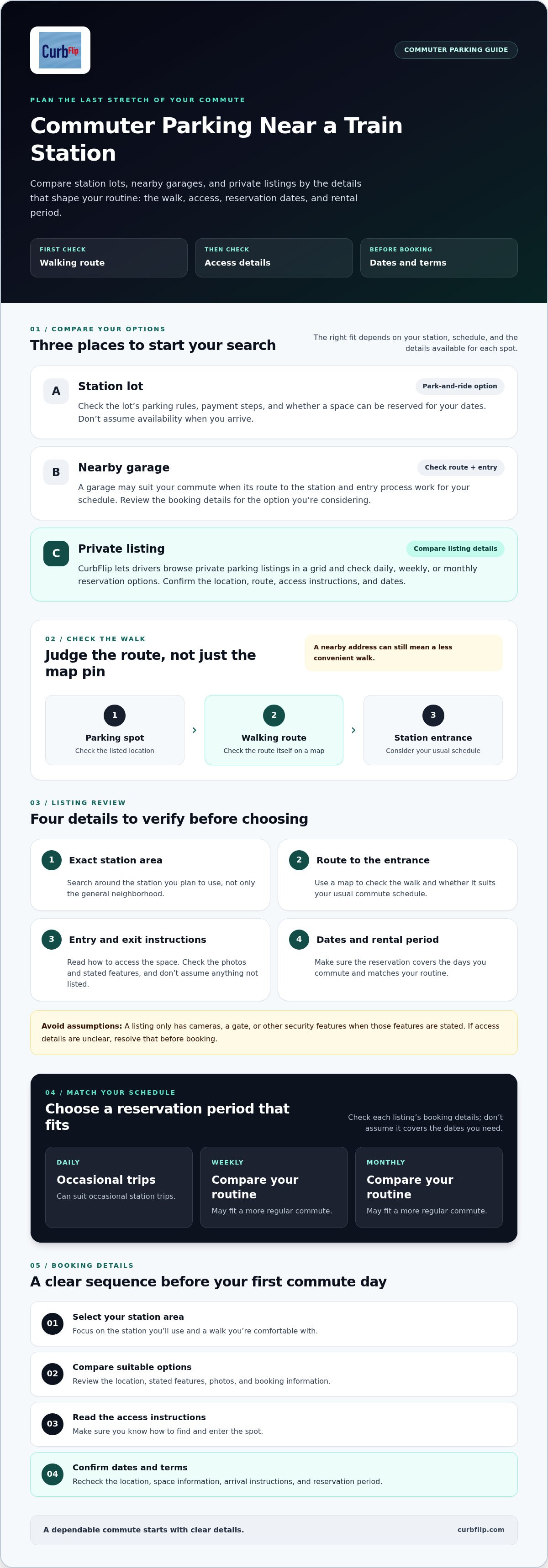
Use this checklist to narrow your options and avoid surprises on your first commute day:
- Identify your station. Search around the exact station you plan to use, not just the general neighborhood.
- Check the walking route. Use a map to estimate the walk from the parking location to the station entrance. Consider whether the route suits your usual schedule.
- Review access details. Read the instructions for entering and leaving. Check listing photos and stated features, but don’t assume a space has cameras, a gate, or other security features unless the listing says so.
- Confirm your dates. Make sure the reservation covers the days you’ll commute and that the rental period matches your routine.
What should you check in a parking listing?
Compare the listed location with the map, then read the host’s instructions carefully. Look for clear information about where to park and how to access the space. If anything is unclear, resolve it before booking. CurbFlip’s parking comparison page can help you review options side by side.
Match the rental period to how often you travel. A daily reservation may suit occasional trips, while weekly or monthly options may fit a more regular commute. Check the booking details instead of assuming a listing covers the dates you need. For station parking, review the relevant operator’s payment steps and rules. For example, LA Metro explains its process on its Pay for Daily Parking page.
Use CurbFlip’s parking tools to explore the platform, then check individual listings for station proximity and booking details. A careful review can help you choose commuter parking near train station that fits your actual routine.
Book Commuter Parking Near a Train Station with More Confidence
Once you’ve found an option that looks suitable, follow a simple booking sequence. Choose the station area, compare listings, read the access instructions, and confirm that the dates cover your commute. Before paying, review the listing and booking details again. Check that the location, space information, arrival instructions, and reservation period match what you need.
- 1. Select your station area. Focus your search on the station you’ll use and a route you’re comfortable walking.
- 2. Compare suitable listings. Review the stated features and photos, and check that the details work for your routine.
- 3. Read the instructions. Make sure you know how to find and access the spot before your first commute day.
- 4. Confirm your dates. Check the start and end dates and any listing terms before completing the booking.
Daily, weekly, or monthly: choose a reservation period
Daily reservations can suit occasional station trips. Weekly or monthly reservations may work better for a recurring commute, but the right period depends on how often you travel and the terms of the individual listing. Confirm that the reservation covers the full period you need, and check availability for those dates before booking. If you’re weighing a recurring spot, read a parking comparison guide to help assess your options.
For commuter parking near train station, a clear booking plan can help you arrive knowing what to expect. The details of each reservation depend on its listing. Explore CurbFlip parking tools to learn about the platform’s parking options.
Make Your Next Train Commute Easier to Plan
The right commuter parking near a train station fits your routine, not just the map. Compare the walk to the platform, review access instructions and stated features, and confirm your dates before booking. Then choose a daily, weekly, or monthly reservation period that matches how often you travel.
CurbFlip lets drivers browse parking listings in a grid layout and explore daily, weekly, and monthly reservations. Check each listing’s location and booking details to see whether it suits your station and schedule. Availability depends on the specific listing, so review the information before you reserve.
Ready to compare parking options for your commute? Explore CurbFlip parking tools and see what may fit your routine. A little planning can make your next trip to the station easier to organize.
Frequently Asked Questions
Is private parking near a train station a good option for commuters?
Private parking is worth comparing if a listed space is near your station, fits your commute, and has clear access instructions. Check its location, walking route, booking dates, and details against station lots or garages. Compare local options in New York, Chicago, Los Angeles, Seattle, Atlanta, San Francisco, London, Denver, Miami, Dallas, Houston, Austin, Nashville, Memphis, New Orleans, Southern California, Toronto, Montreal, or Vancouver. Whether a spot suits you depends on its details and your routine.
Can I reserve commuter parking near a train station in advance?
Some parking marketplaces offer advance reservations near train stations, but availability depends on the specific listing and dates. Search near your station, review the space details and access instructions, then confirm that the booking covers every day you need. CurbFlip supports daily, weekly, and monthly reservations, but nearby listings aren’t guaranteed. Check the details before booking.
How do I choose a safe parking spot near a train station?
Review the listing’s location, access information, and any stated security features. Check the walking route and confirm that the dates and instructions are clear. Don’t assume a space has cameras, lighting, a gate, or patrols unless the listing confirms them. If a detail matters to you or isn’t clear, contact the host before you book.
Should I book daily, weekly, or monthly commuter parking?
Match the reservation period to how often you travel by train. Daily parking may suit occasional trips, while weekly or monthly options may fit a regular commute if listings cover your dates. Read the listing’s terms and confirm availability for the full period before booking. Compare options based on your routine rather than assuming one rental period is always best.
Disclaimer
The content provided in this article is for informational purposes only. All uses of the CurbFlip name, images, logos, and likeness are the exclusive property of CurbFlip.com. This article may contain information researched by a third-party, meaning CurbFlip does not guarantee the accuracy, completeness, or reliability of any third-party information presented herein and assumes no liability for any decisions made or actions taken based on this content.


